
News
Explore our lift solutions
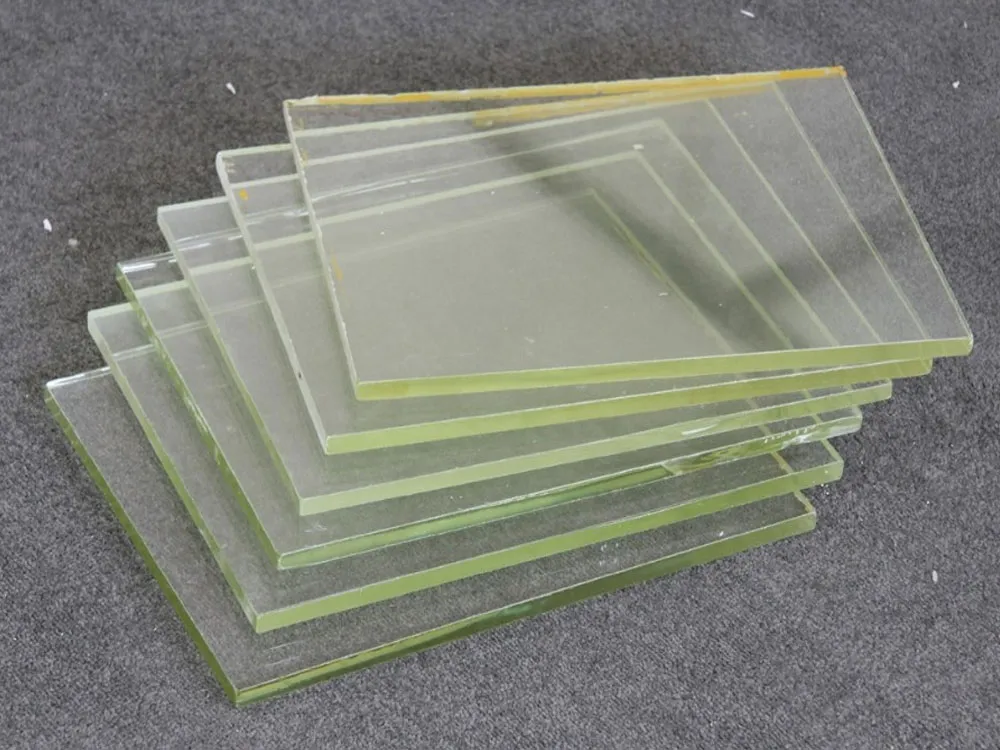
Radiology lead glass, also known as Chengdu radiation-proof lead glass or X-ray protective lead glass, is specifically designed for medical X-ray protection and radiation protection.
2. Product Features of Lead Glass
Lead glass boasts advantages such as high lead content, strong protective capabilities, good oxidation resistance, and absence of impurities and bubbles. Its light transmittance is ≥85%. The lead content is ≥26%, and the barium content is ≥15%. This high lead and barium content results in a density as high as 4.1150px/g, exceeding national standards!
3. Applications of Lead Glass
Lead glass is a transparent X-ray protective material, suitable for applications such as X-ray diagnostics, nuclear medicine, and industrial radiation protection—anywhere requiring protection. This ensures superior protective performance. The installation of lead glass observation windows must be equipped with a professional lead glass frame to prevent radiation leakage and protect the lead glass. The lead glass frame is made of stainless steel with an internal layer of medical-grade lead.
4. Common Specifications of Lead Glass
1000mm x 800mm x 15mm, 1200mm x 800mm x 15mm, 1500mm x 900mm x 20mm, etc.; other specifications can be customized according to customer requirements.
5. How to Choose Lead Glass
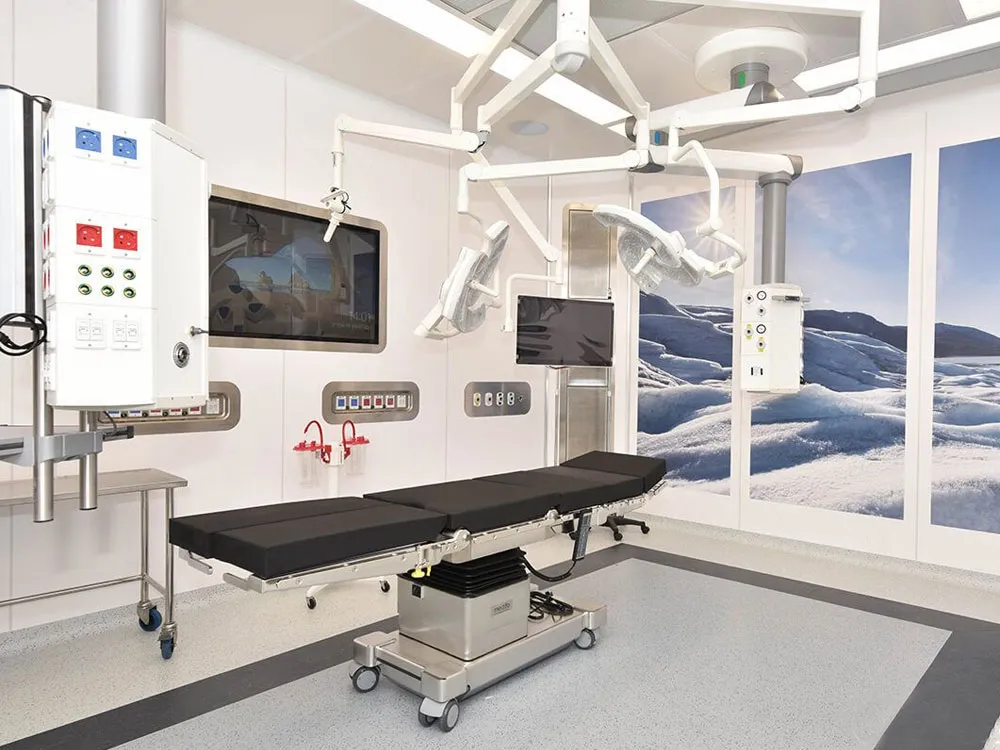
Since hospital radiology departments use radiation-proof glass, its performance is a common concern for both manufacturers and customers. Currently, there are many manufacturers of radiation-proof glass on the market, making it difficult for many hospitals to choose. So, what factors should we pay attention to when purchasing radiation-proof glass?
5.1 Lead glass protection adopts the principles of shielding and distance protection.
Shielding protection refers to using materials with high atomic numbers, commonly lead or lead-containing materials, as a barrier to absorb unwanted X-rays. Distance protection utilizes the principle that X-ray exposure is inversely proportional to the square of the distance, reducing exposure by increasing the distance between the X-ray source and the human body. Lead glass is both radiation-proof and transparent; when the X-ray exposure is within permissible limits, lead glass generally has little impact. People shouldn't refuse necessary X-rays and CT scans because of radiation, nor should they be afraid to enter the radiology department.
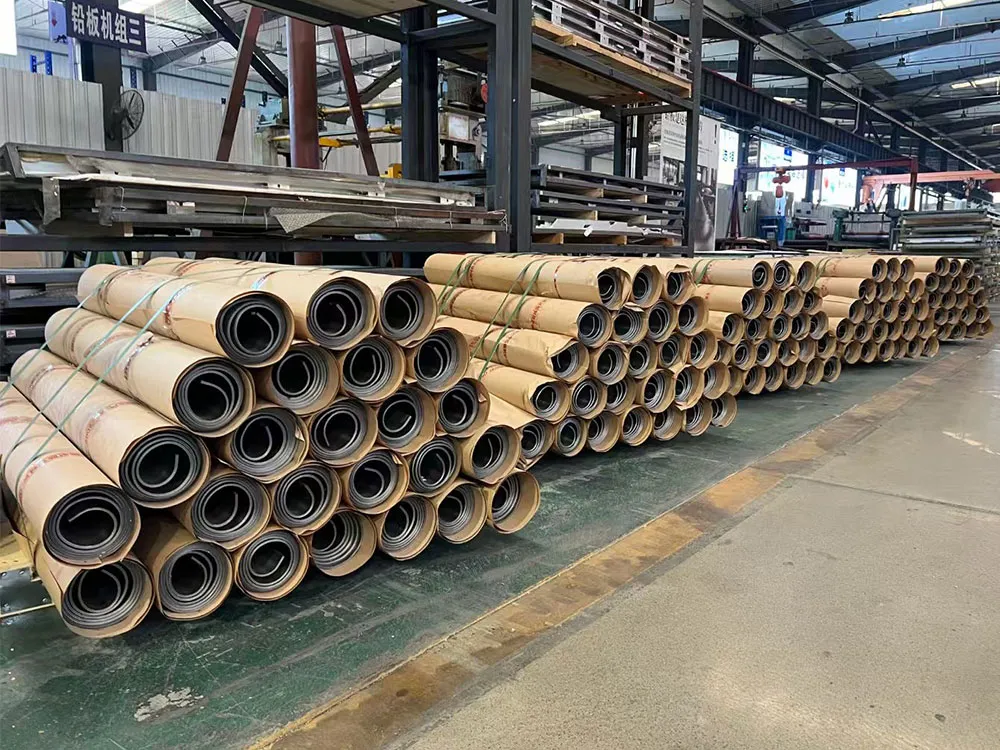
5.2 The main structure of protective lead glass: Steel + lead composite structure is commonly used.
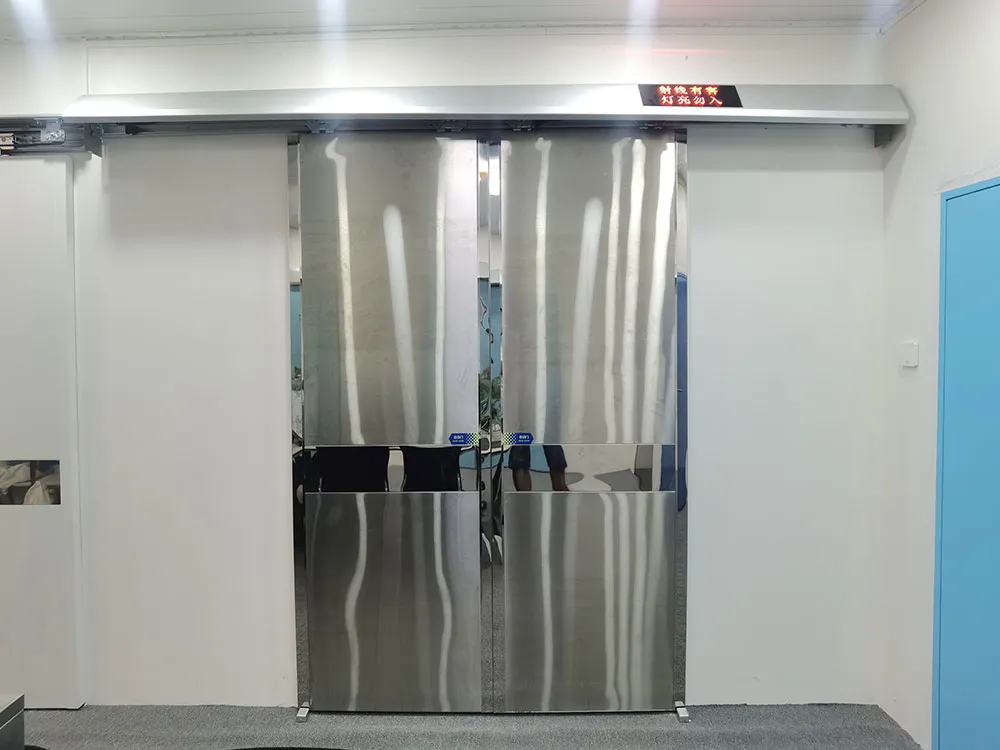
We need to understand its construction and uses. Lead doors can be divided into double-leaf swing doors and single-leaf sliding doors, with both electric and manual transmission methods. Electric doors can be developed and manufactured according to installation conditions and consumer requirements. The door size and shielding layer thickness should be selected according to the size of the radiation energy room.
6. Research methods on the photosensitivity and mechanism of lead silicate glass
The photosensitivity of glass materials refers to the fundamental change in the refractive index of certain glass materials after exposure to ultraviolet light. Utilizing the photosensitivity of glass materials, it is easy to fabricate fiber optic gratings and planar waveguide gratings, which have wide applications in optical communication and optical sensing.
The Brewster angle method was used to measure the refractive index change of lead silicate glass materials with different compositions after exposure to 266nm laser light. It was found that the refractive index of lead silicate glass changed negatively after being irradiated with a low power density (50 mJ/cm²) 266 nm laser. A larger refractive index change Δn = 0.25 × 10.04 was observed in lead silicate glass containing 50 mol% lead oxide.
The mechanism of photosensitivity in lead silicate glass was investigated using ultraviolet-visible absorption spectroscopy, electron spin resonance spectroscopy (ESR), Raman spectroscopy, and X-ray photoelectron spectroscopy (XPS).
(1) Electron spin resonance spectroscopy showed that 266 nm laser irradiation did not produce paramagnetic defects in lead silicate glass, unlike germanium dioxide or tin dioxide-doped silica glass.(2) The internal structure of lead silicate glass changed differently depending on the energy density of the 266 nm laser irradiation. When the laser energy density exceeded a certain threshold, the photosensitivity of lead silicate glass increased significantly in the visible light spectrum.
(3) When irradiated with a high-energy-density 266nm laser, brown spots appeared on the surface of the lead silicate glass. The absorption coefficient in the visible light region increased significantly. XPS experiments showed that the lead oxide content on the surface of the lead silicate glass increased, indicating that the brown spots were caused by the precipitation of some lead oxide.
(4) When irradiated with a low-energy-density 266nm laser, no brown spots were produced on the surface of the lead silicate glass. The absorption coefficient in the visible light region increased slightly, the absorption edge became flatter, and the Urbach energy increased, indicating that the disorder of the glass structure increased. Raman spectroscopy experiments showed a decrease in the Pb-O bond vibration peak, indicating that some Pb-O bonds in the lead silicate glass were disrupted due to 266nm laser irradiation.
Lead silicate glass films were fabricated on quartz glass substrates using the sol-gel method. The absorption spectra of the lead silicate glass films before and after UV laser irradiation were measured. It was found that 266nm UV irradiation had no effect on the absorption peak of lead silicate glass at 235nm. This is consistent with the experimental results of electron spin resonance spectroscopy. However, 248nm excimer laser irradiation caused photobleaching of the 235nm absorption peak of lead silicate glass.
7. Storage Method for Radiation-Proof Lead Glass
Radiation-proof lead glass should be stored in a dry and ventilated area. It should not be washed with water, otherwise spots will appear. If spots have already appeared, they can be wiped with absorbent cotton and ethanol. Due to the fragile stability of glass, it should be kept away from chemicals such as paint and thinner. If these come into contact with each other, the glass is easily oxidized. For short-term cleaning, ethanol can be used. If this does not work, please contact a professional.
8. Installation Method of Lead Glass
Radiation-shielding lead glass is a brittle material. Due to its relatively high density, it must be handled with care. When fixing lead glass to a window, the area around the window should be sealed with lead plates or lead rubber to prevent light leakage. Damp wood should not be used for the window frame when installing radiation-shielding lead glass, as the lead glass will be damaged when the wood shrinks. The surface of the radiation-shielding lead glass should not come into contact with or rub against hard or rough objects to prevent marks from appearing.


Send Us A Message
Please give us a message